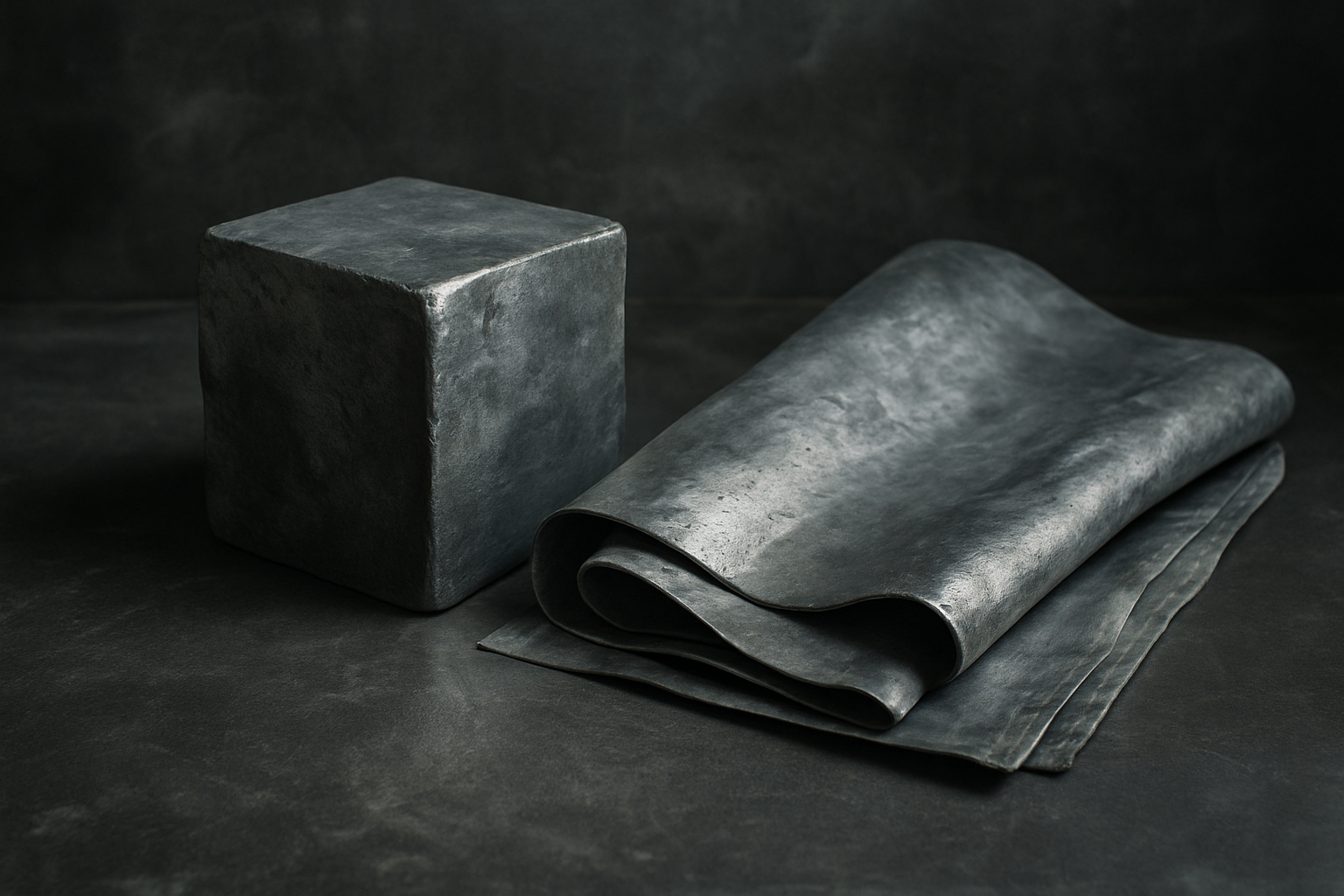
Neither gold nor bronze, lead does not seek attention. Its hue — soft, sombre, almost apologetic — evokes overcast skies and cathedral rooftops, the patina of monuments and mausoleums. Historically mistrusted for its toxicity yet prized for its malleability, it’s a material of contradiction: easily shaped, dangerously seductive. The Romans lined their aqueducts with it; medieval scribes painted halos with lead white. In sculpture, it offers gravitas — literally and symbolically. Rachel Whiteread and Antony Gormley have both exploited its weight and opacity to reflect on memory, absence, containment.
Lead does not shine. It absorbs. It speaks in undertones — of history, of industrialism, of things buried and forgotten. In an age chasing gloss, lead reminds us of the subterranean. It’s the unexpected quiet material at the core of legacy systems — unflashy, fundamental, foundational. A metal for a platform not seeking clout but cohesion. Not spectacle, but substance.